Q1 whitepaper hero

WHITE PAPER

Safe Patient Handling Starts at the Bed

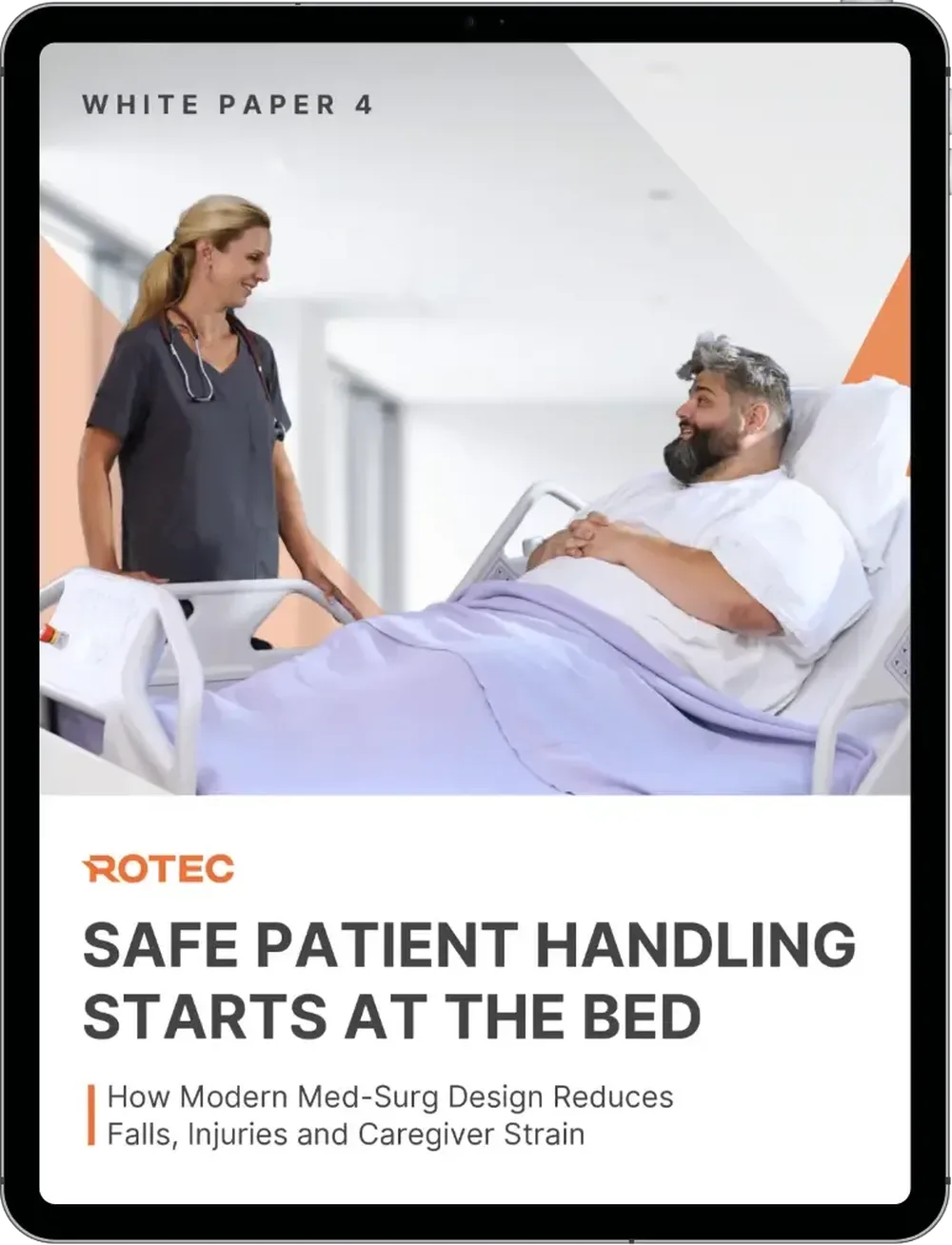
Modern Med-Surg design protects patients and caregivers, reducing the risk of injury at the point of care.

Ipad Mockup

Engineered to Enhance the Quality of Care

Safe patient handling programs succeed or fail at the bedside.

Falls, caregiver injuries, and unsafe movement often trace back to equipment design. Bed height, stability, side rail behavior, and predictable motion all play a direct role in how safely patients can be repositioned, transferred, and mobilized - especially across mixed-acuity populations.

Our latest white paper, Safe Patient Handling Starts at the Bed, examines how hospital bed engineering influences real-world safety outcomes. Explore in depth why bedside design matters, how bariatric and non-bariatric handling needs differ, and which bed design elements help reduce risk for both patients and caregivers.

3 Defining Characteristics…With Equal Weight

Circle check orange 40px

Adaptability

No two patients are alike, which is why VersaTech offers the most variety in customization. The electric drive assist system also makes it easy for caregivers to maneuver through a wide variety of care settings.

Customization Options: 

  • • Weight capacity: Up to 1,100 lbs
  • • Width: 36'', 39'', 42'' or 48''
  • • Length: 80'', 84'' or 88''
  • • Backrest/Headrest Customization: 0-70°
Circle check orange 40px

Safety

Lowering bed height is widely considered best practice for reducing risk of falls, and VersaTech Bariatric Beds are the lowest in the world. Additional features such as an advanced monitoring system and robust railing take safety even further.

Circle check orange 40px

Durability

VersaTech Bariatric Beds are sturdy and easy to maintain and service, leading to much less downtime.

Download the White Paper

Discover how thoughtful design supports safer handling, improved mobility, and stronger alignment with hospital safety goals.